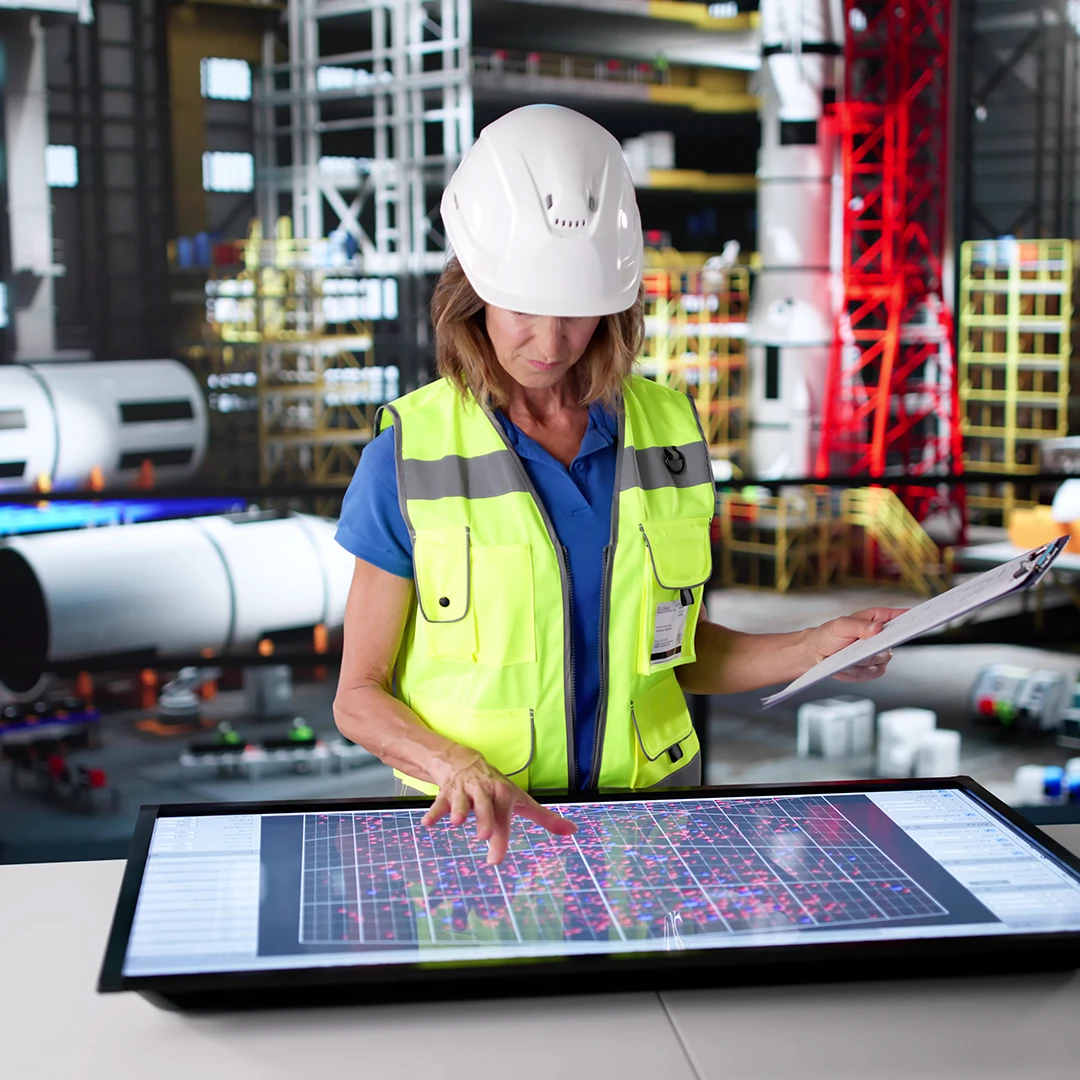
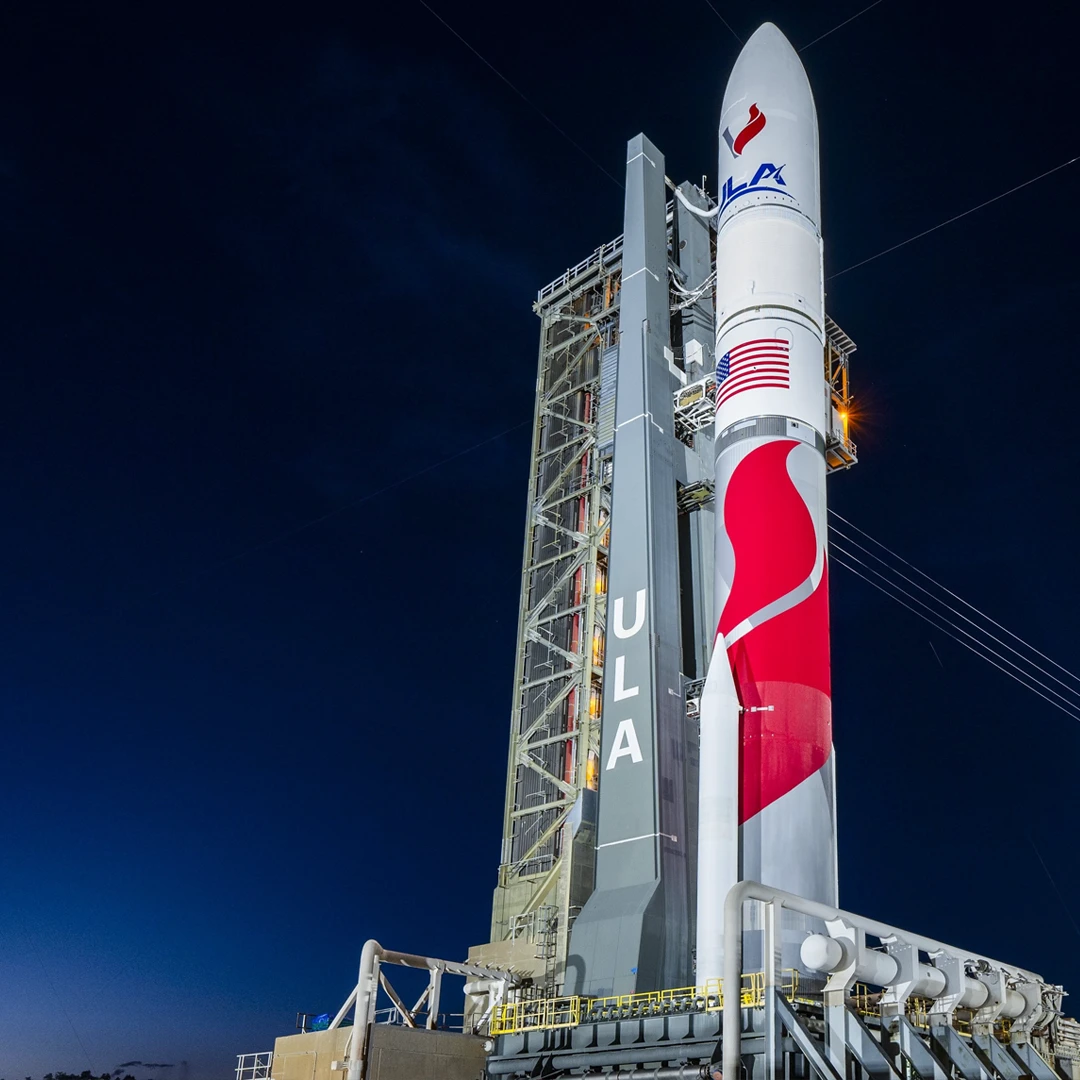
For six and a half years, Carol Gardini has worked as a PDS consultant supporting United Launch Alliance (ULA), tackling structural analysis on some of the aerospace industry’s most demanding rocket programs. Her experience shows what it takes to thrive as an engineering consultant in high-reliability environments and why PDS consultants like Carol keep coming back for more.
Leading Strength Analysis on Vulcan Rocket Components
Carol’s biggest career challenge came during her second ULA contract, when she was appointed to lead the strength effort to optimize Vulcan Boost and Upper Stage parts redesigned using additive manufacturing (AM).
The technical bar was high.
- The required safety factors for AM parts were significantly higher than those for traditional wrought materials.
- A steep knockdown factor was applied to fatigue life curves to account for a lower endurance limit.
- Each part went through multiple rounds of design and analysis.
Of roughly 22 components considered, only four were successfully redesigned. Twelve others cleared rigorous design iterations but were ultimately shelved due to weld safety concerns, underscoring how demanding the effort was.
“Despite the less-than-stellar outcome, it was exciting to help bring four designs to closure and to lead this strength effort while being involved at the forefront of advancement in manufactured technology.”


From Jet Engine Tooling to Rocket Science
Before joining ULA, Carol analyzed jet engine assembly and disassembly tooling, working with relatively simple, limited load cases. Rocket hardware demanded a different level of rigor entirely, including:
- Vibratory loading across all orthogonal directions.
- Coupled Loads Analysis output from ULA’s Structural Dynamics group.
- Enforced displacements and thermal loading.
Her work certifying the Interim Cryogenic Propulsion System (ICPS) for human flight on NASA’s Artemis missions pushed her fracture mechanics expertise even further, and close collaboration with Avionics, Design, Thermal, and Structural Dynamics teams became central to her growth as a strength analyst.
A Career Highlight: Redesigning the Centaur V Bracket
One of Carol’s proudest moments came when she picked up an analysis left behind by a departing colleague, with little handoff documentation to work from. Her task was to redesign a mounting provision tower bracket on the Centaur V Aft Bulkhead to carry additional harness wires.
A load audit uncovered a critical issue: the original design had been modeled incorrectly, resulting in inaccurate margins of safety. Working against production deadlines, Carol iterated on tower thickness, fillet radii, and slot placement to strengthen the design while minimizing added mass. The analysis required both linear and non-linear methods to satisfy weld margins.
She delivered on time and on budget. The resulting design now supports the remainder of the Vulcan fleet.


How Carol Stays Ahead in Aerospace Engineering
Carol keeps her skills sharp through a mix of formal training and self-directed learning:
- Follows aerospace industry news via LinkedIn
- Completed FEMAP courses for finite element pre- and post-processing
- Learned Altair HyperWorks during her time at ULA
- Uses online how-to resources, including FEMAP manuals compiled by ATA Engineering
Advice for Aspiring Structural Analysts
Carol’s top piece of advice is to ask for help. Her team used group chats to crowdsource tough questions, and while it wasn’t always comfortable, the time saved was immediate. She also encourages professionals to volunteer as peer reviewers as often as possible, calling it one of the fastest ways to build skills on both sides of the review process.
What Makes a Strong PDS Candidate?
In Carol’s view, the best PDS consultants share a few key traits:
- Self-motivated and willing to learn from mistakes
- Ready to take on challenges outside their comfort zone
- Clear communicators who collaborate well across teams
- Willing to put in extra effort when milestones demand it
- Backed by a strong, honest work ethic
Why Mentorship Matters
Networking has directly shaped Carol’s career path, helping her move from one ULA contract into a second. She’s stayed connected with former colleagues, including a mentor, who may play a role in her next opportunity. She’s also paid it forward, mentoring a newer analyst through the fundamentals of the job.
“Mentoring helps the enterprise as a whole, and ULA depends on analysts helping each other.”