

Despite decades of veteran hiring initiatives, a growing body of evidence on veteran workforce performance, and consistent advocacy from employers who’ve benefited from veteran talent, many technology and engineering organizations still pass over veteran candidates based on assumptions that don’t hold up to scrutiny. The result is a systematic underweighting of a high-quality talent pool by employers who can’t afford to be picky.
Here are the most common misconceptions, and what the reality actually looks like.
Misconception 1: “Military Experience Doesn’t Translate to Tech Roles”
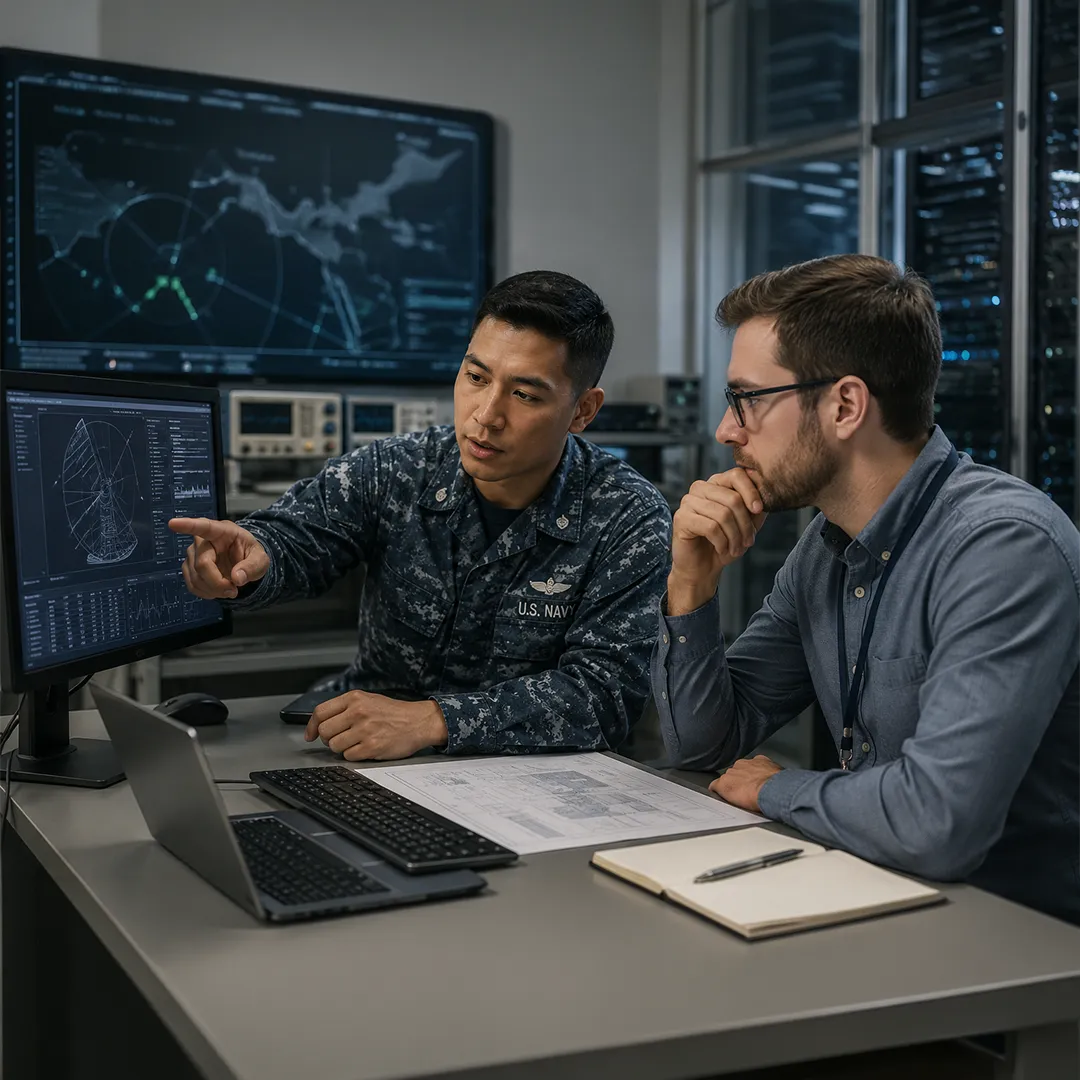
The U.S. military operates some of the most sophisticated technology systems in existence: satellite communications infrastructure, active radar and electronic warfare systems, nuclear propulsion systems, classified computing networks, GPS and precision navigation systems, and increasingly, AI-enabled command and control systems. Veterans who maintained, operated, integrated, or troubleshot these systems have directly relevant technical experience.
The gap that exists is typically in vocabulary and formal credentials, not in technical capability. A Navy electronics technician who calibrated and maintained fire control radar systems doesn’t call what they did “signal processing” or “systems integration”, but that’s what it was. Knowing how to bridge that vocabulary gap is a recruiting skill. Concluding there’s no technical capability because the résumé doesn’t use familiar language is a hiring failure.
Misconception 2: “They’ll Have Trouble Adapting to an Unstructured Environment”
Military service doesn’t create inflexibility, it creates an ability to adapt to new environments while maintaining discipline. Veterans move across assignments, commands, and operating environments throughout their careers. Adapting to new contexts while maintaining professional standards is a core military competency.
What veterans do bring is a preference for clear objectives and explicit expectations. This reads as rigidity to some civilian managers. It is actually a very useful trait in technical environments where ambiguous requirements and unclear success criteria cause more project failures than almost anything else. A team member who asks “what does success look like?” before starting work is not inflexible, they’re professionally disciplined.

Misconception 3: “Junior Enlisted Veterans Aren’t Senior Enough”
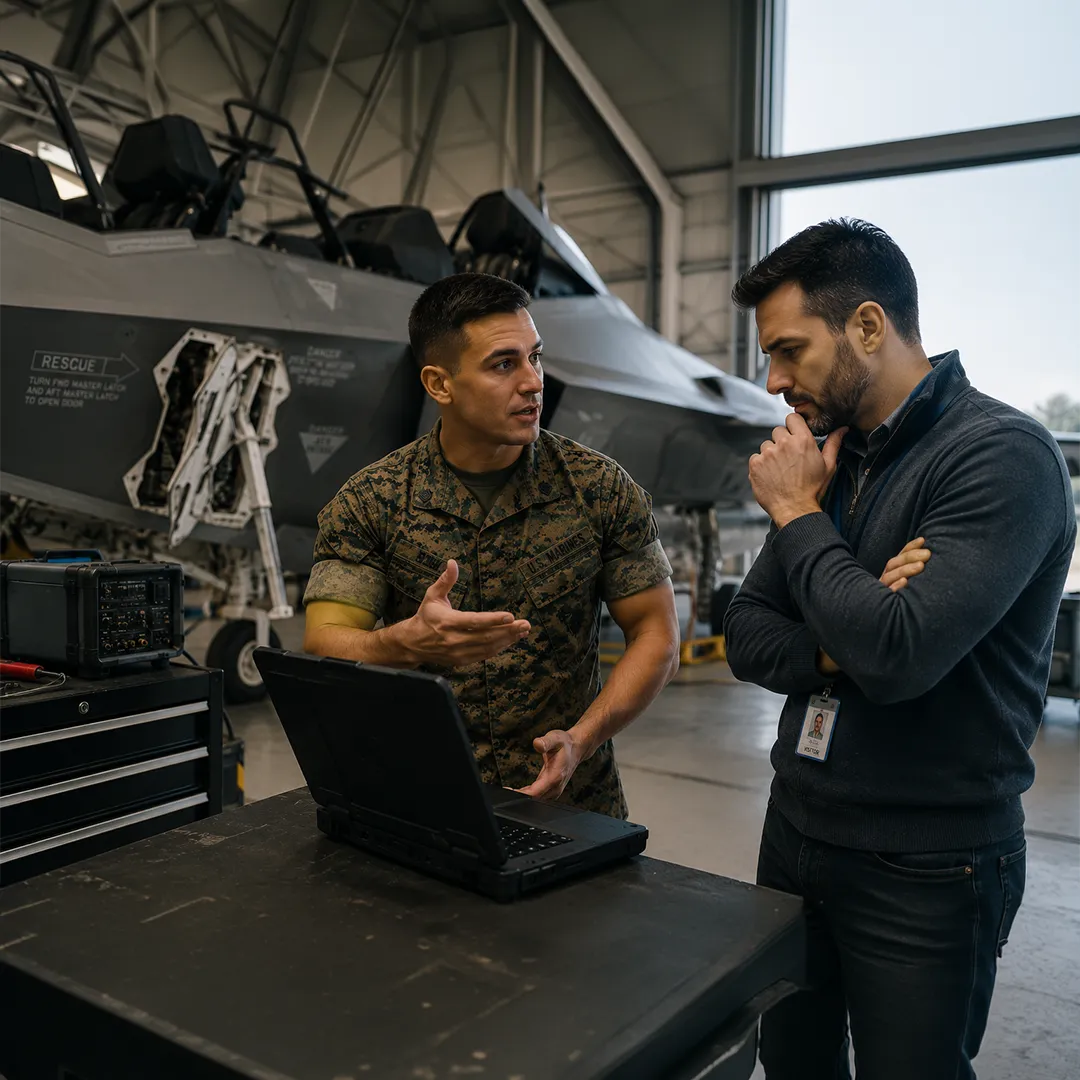
Military rank doesn’t map directly to civilian seniority expectations. An E-5 or E-6 with a technical specialty and six years of service has often accumulated hands-on experience that civilian candidates with equivalent years simply haven’t had access to. The scale and operational intensity of military technical training and practical experience routinely exceeds what civilian pathways produce in the same timeframe.
A Marine Corps E-5 avionics technician who has maintained F-35 systems in deployed operating conditions has more directly relevant experience than a civilian who graduated with an aviation technician certificate and has been working QA in a production environment for the same number of years. The rank doesn’t tell the story; the experience does.
Misconception 4: “They’ll Struggle with the Collaborative Nature of Tech Teams”
Military units are among the most operationally collaborative organizations that exist. Small teams with defined roles, shared accountability for mission outcomes, high interdependence, and frequent peer pressure for individual performance, this describes both a military fire team and a high-functioning agile engineering team. Veterans have spent years operating in exactly this structure.
The adjustment veterans often make is to less-structured communication norms and more lateral peer relationships. These are real adjustments. They’re also adjustments that most veterans make quickly.


Misconception 5: “We Don’t Know How to Evaluate Their Background”
This is the most honest of the misconceptions, and it’s the most solvable. Military occupational specialty codes (MOS for Army, AFSC for Air Force, NEC for Navy) have well-documented civilian equivalencies. An 18E Special Forces Communications Sergeant maps clearly to senior network and communications roles. A 2A3X4 fighter aircraft crew chief maps to aircraft maintenance technician. A Navy 14X nuclear machinist’s mate maps to nuclear operator and maintenance roles in commercial nuclear.
Staffing partners with veteran recruiting specialization can perform these translations efficiently and accurately. The knowledge gap in your hiring manager’s office doesn’t have to be a barrier, it’s a gap that veteran recruiting expertise fills.
Misconception 6: “The WOTC Paperwork Isn’t Worth It”
The Work Opportunity Tax Credit for qualified veteran hires can reach $9,600 per hire. For organizations hiring through a staffing agency, the certification process is typically managed by the agency, substantially reducing the administrative burden. For companies hiring ten veterans per year, that’s up to $96,000 in tax credits. The paperwork, even if the employer handles it, is a manageable one-time investment per hire.


The Opportunity That’s Being Missed
The cumulative effect of these misconceptions is that veteran candidates are systematically screened out or undervalued in technical hiring pipelines by employers who, in many cases, are struggling to fill exactly the roles veteran technical training prepares people for. The opportunity cost is real on both sides.
The Bottom Line
PDS has been placing veterans in technical and engineering roles for decades. Talk to our team about integrating veteran recruiting into your hiring strategy.
