
Most companies don’t need one IT professional. They need a team, and that team spans a wide range of disciplines, from front-end developers and data engineers to infrastructure architects, QA leads, and project managers. Finding all of those people, quickly, with the right skills and the right fit is a genuinely hard problem. A generalist recruiter posting job descriptions on LinkedIn isn’t going to solve it.
Here’s how full-stack IT staffing services work, why specialization matters at every layer, and what to expect from a staffing partner who can support your whole technology organization.
The Full Stack Hiring Problem
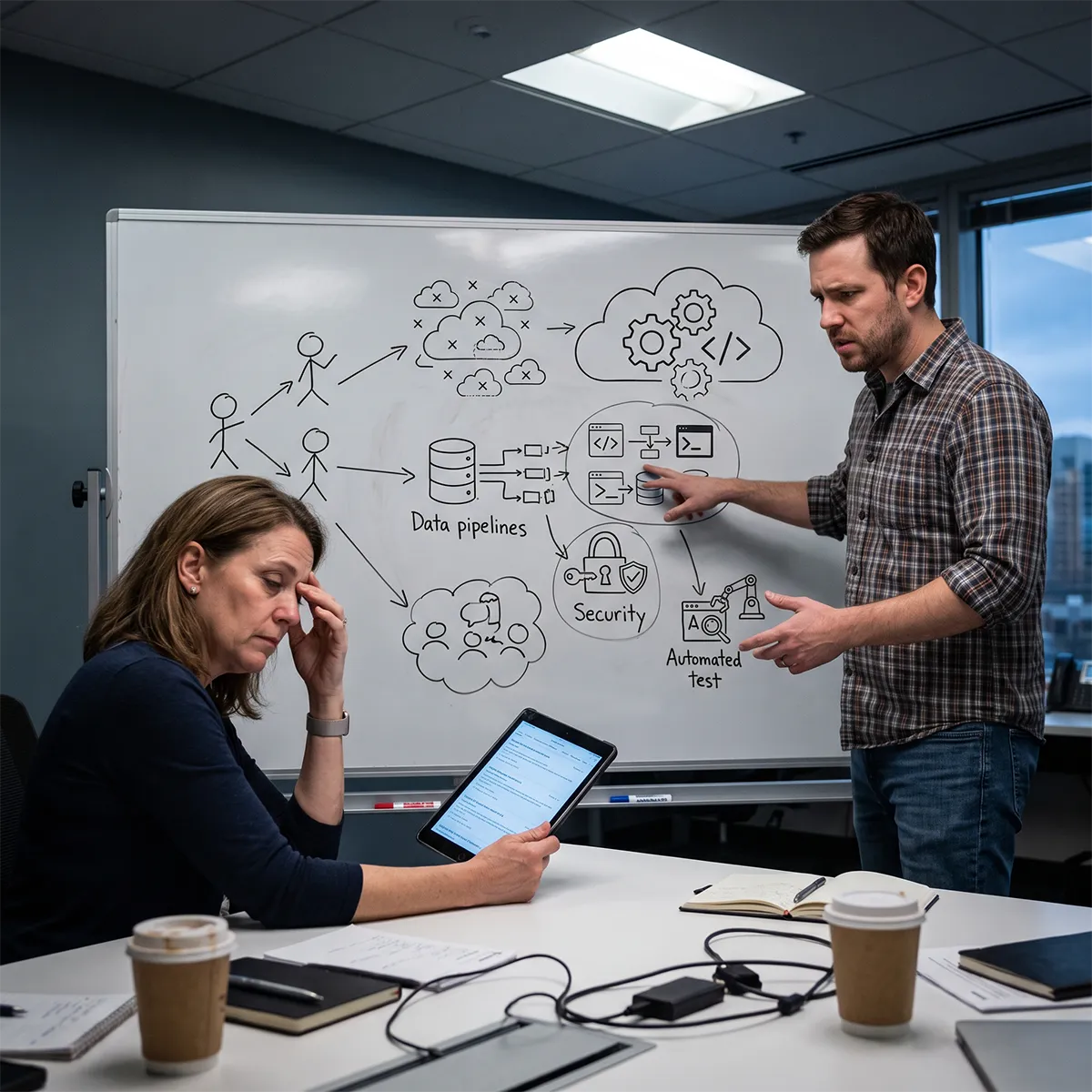
When a company embarks on a major initiative, a platform migration, a new product launch, a cloud transformation, they almost always underestimate how many distinct skill sets are required. A “tech team” for a mid-market platform migration might need:
- Front-end engineers fluent in React, Angular, or Vue
- Back-end engineers in Node, Python, Java, or .NET depending on your stack
- Data engineers and analysts who can work with your existing warehouse and pipelines
- DevOps and cloud infrastructure specialists on AWS, Azure, or GCP
- QA and test automation engineers with framework coverage
- Business analysts and technical product owners who can bridge engineering and stakeholders
- Application support and IT operations for the ongoing run state
- Security and compliance professionals if the system touches regulated data
Hiring managers who try to fill all of these roles through internal recruiting or general job boards face a consistent reality: the best candidates aren’t applying. They’re already employed, often on contract, and not monitoring job listings. Finding them requires relationships, not postings.
What Full-Stack IT Staffing Services Actually Do
1. Proactive candidate pipelines built on relationships
Experienced IT recruiters don’t wait for job postings to generate interest. They maintain active relationships with passive candidates, technical professionals who aren’t actively looking but are open to the right opportunity when it’s presented by someone they trust. This is where the best candidates live.
2. Technical screening that goes beyond résumé review
Generalist recruiters often can’t evaluate whether a candidate truly knows Kubernetes from kubectl, can distinguish a data warehouse from a data lakehouse, or understands the difference between integration testing and end-to-end testing. Specialized IT staffing teams build screening processes around actual technical competencies, validated by people who understand the discipline.
3. Parallel hiring across multiple roles simultaneously
When you need to build a team, not just fill a seat, a staffing partner can run parallel searches across six or ten roles at the same time. What would take an internal TA team twelve months of sequential hiring can compress into a matter of weeks when the recruitment operation scales with the need.
4. Contract and direct hire flexibility by role type
Not every role on a full-stack team should be permanent, and not every role should be contracted. A staffing partner helps you map which roles warrant permanent employment, which should be contracted, and which might work cleanly as SOW-based deliverables, and then executes across all three models.


The Roles IT Staffing Agencies Recruit Best
PDS specializes in technical placements that generalist agencies typically struggle to fill with qualified candidates:
- Software engineers and full-stack developers across major frameworks
- Data engineers, data scientists, and ML/AI specialists
- DevOps, SRE, and cloud infrastructure engineers
- QA engineers and test automation architects
- IT project managers and program managers with delivery track records
- Business analysts and technical product owners
- Application support and systems administrators
- Cybersecurity engineers and analysts
Each of these disciplines has its own recruiting sub-market with different talent networks, different screening requirements, and different compensation benchmarks. A recruiter who covers all of them without specialization covers none of them well.
Why Specialization Matters: The Signal Quality Problem
The difference between a generalist recruiter and a specialized IT staffing agency isn’t primarily speed; it’s signal quality. When a recruiter understands the difference between a senior and staff-level engineer, can evaluate a GitHub profile for code quality indicators, and knows which frameworks are genuinely compatible with your existing stack, the candidates they submit are meaningfully better matches. Fewer interviews. Fewer early departures. Higher conversion rates from submitted to hired.
At PDS, our recruiters work within defined technical verticals. An IT recruiter focused on data engineering roles builds a fundamentally different network and screening capability than one covering all of “tech.” That specificity is what makes the difference between a list of candidates and a genuine shortlist.


How to Engage a Full-Stack IT Staffing Partner
The most effective engagements start with a conversation about the full picture, not just the open req. What does your technology stack look like? What’s the program context? What roles are you planning to open over the next six months? A staffing partner who understands your full hiring roadmap can maintain pipeline across your anticipated needs rather than starting cold every time a new req opens.
Talk to our IT staffing team to map your hiring needs across roles, timelines, and delivery models.
