

Six Forces Straining Aerospace Program Staffing
Aerospace engineering programs operate in one of the most demanding talent environments of any industry. Tight timelines, complex technical interdependencies, and zero-tolerance quality standards leave little room for hiring delays or misfits. Yet the structural workforce challenges facing aerospace programs have gotten harder, not easier, over the past decade, and standard hiring approaches don’t address most of them.
Here’s an honest assessment of the most significant challenges and how leading programs are responding.

Contract Staffing in Aerospace: The Essentials
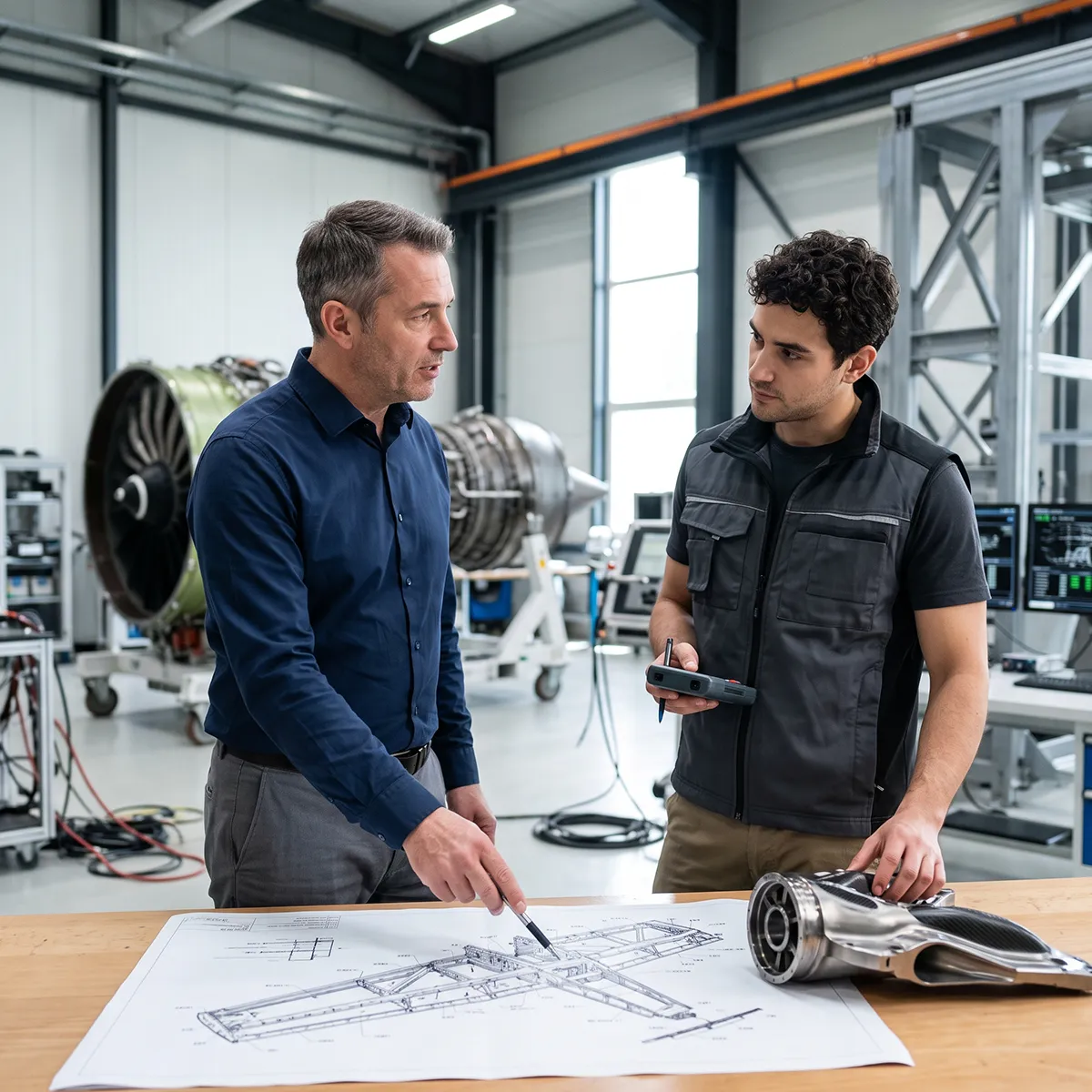
In a contract staffing model, PDS provides individual contractors who work under your program’s direct supervision. You set the priorities, direct the daily work, manage the pace, and hold the contractor accountable to your standards. PDS handles employment administration, payroll, benefits, workers’ compensation, and employment compliance, so you capture the capability without the employer obligations.
This model works well for work that requires deep integration into your team’s daily operations, evolving scope that changes week to week, or roles where the contractor must operate inside your systems, facilities, and security protocols.
Six Structural Challenges Facing Aerospace Program Hiring
These pressures compound rather than operate in isolation; an aging workforce, clearance timelines, and geographic concentration all make each other harder to solve. Understanding each one individually is the starting point for building a hiring strategy that actually works.

1. An Aging Workforce with a Thin Replacement Pipeline
The aerospace engineering workforce skews older than almost any technical discipline. A substantial cohort of engineers hired during the defense buildups of the 1980s and 1990s is now at or near retirement age. The institutional knowledge concentrated in this workforce, knowledge of legacy system architectures, production processes, and program histories, is not easily transferred or quickly rebuilt.
The pipeline of incoming graduates with the specific skills aerospace programs need is not keeping pace. Universities produce aerospace engineers, but the specializations most in demand, propulsion systems, avionics integration, structural fatigue analysis, require years of program experience to develop beyond academic foundations. One underused source of ready-made technical talent is the military pipeline: see “From Military Service to the Workplace” and the financial incentives available for hiring veterans.
2. Security Clearance Timelines Create Structural Constraints
For government and defense aerospace programs, clearance requirements create hiring constraints that don’t respond to normal market signals. A candidate who needs a new investigation can take 6–18 months to reach full cleared access, depending on the level and their background complexity. Even reinvestigations, for candidates who held clearances previously, can require 3–6 months.
Programs that operate reactively, opening requisitions when the workforce gap is already felt, consistently fall behind because the clearance timeline means even a great hire can’t contribute to sensitive work for months after they start. The programs that manage this well treat cleared personnel pipelines as a long-term relationship asset, maintained continuously rather than activated in response to a req.


3. Competition from Commercial Space and High-Compensation Tech
The talent landscape for aerospace engineers has changed significantly over the past decade. Commercial space companies, operating with compelling missions, faster development cycles, and strong equity compensation, compete directly with traditional defense primes for systems engineers, propulsion engineers, avionics engineers, and increasingly, software engineers who work on flight systems.
Simultaneously, technology companies have long competed for software-adjacent aerospace talent (embedded systems, flight software, simulation) with total compensation levels that are structurally difficult to match on government contract work. Engineers in their late 20s and early 30s who can choose between a defense program and a commercial space company often make decisions on mission alignment and growth trajectory rather than base salary alone.
For more on how this is reshaping the sector, see “Tracking 2025 Aerospace and Defense Trends”.
4. Specialized Skills in Genuine Short Supply
Several aerospace specialties are chronically understaffed relative to demand, and the shortage isn’t a function of compensation alone; the qualified candidate pool is simply small:
Propulsion engineers with liquid or solid rocket motor development experience, particularly those who’ve worked through development programs rather than just maintenance, are among the scarcest profiles in the market.
Structures engineers with composites and additive manufacturing background for aerospace applications are in increasingly high demand as programs shift to modern materials.
Systems engineers with model-based systems engineering (MBSE) proficiency, particularly those who can work in SysML and execute functional architectures in modern toolsets, are scarce relative to the number of programs now requiring MBSE.
Embedded software engineers for flight-critical systems, who understand safety-critical development practices (DO-178C, MISRA C, formal verification), represent a small specialized population heavily competed for by every avionics program,

5. Geographic Talent Concentration Creates Location Risk
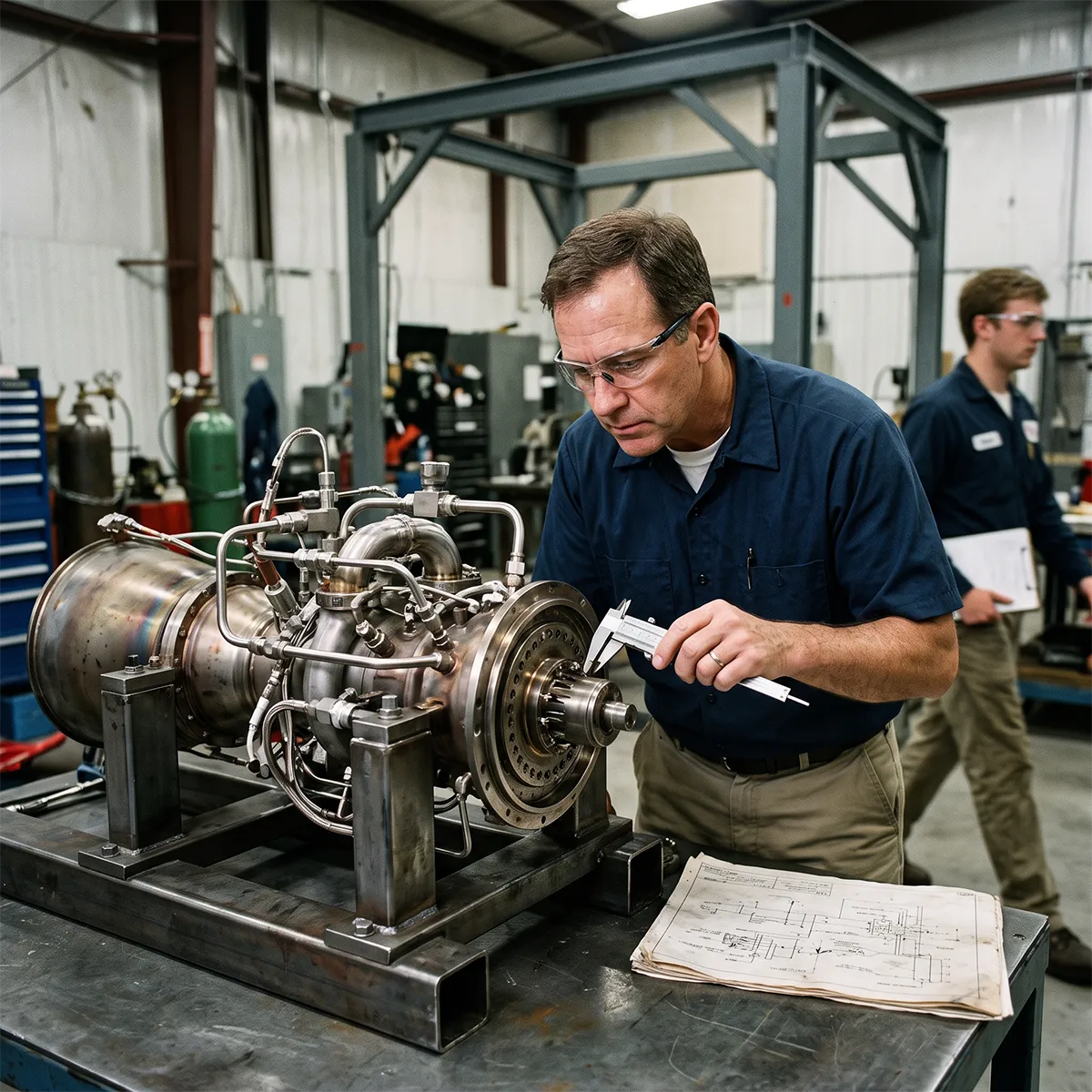
Aerospace talent clusters heavily around a handful of major program hubs: Greater Los Angeles and Southern California broadly (the largest aerospace metro in the country), Seattle, Huntsville, Houston, the Space Coast in Florida, and a handful of other concentrations. Programs located outside these hubs face a structural disadvantage: they must either attract candidates to relocate or build pipelines into markets that require significant travel.
The shift toward hybrid and remote work has helped for some engineering disciplines — analysis work, software development, systems engineering documentation — but aerospace manufacturing, test, and integration work is fundamentally site-dependent. PDS maintains an active presence in these hub communities through initiatives like our SoCal Aerospace Network and the Colorado Aerospace & Defense Caucus.
6. Advanced Manufacturing Skills Gap
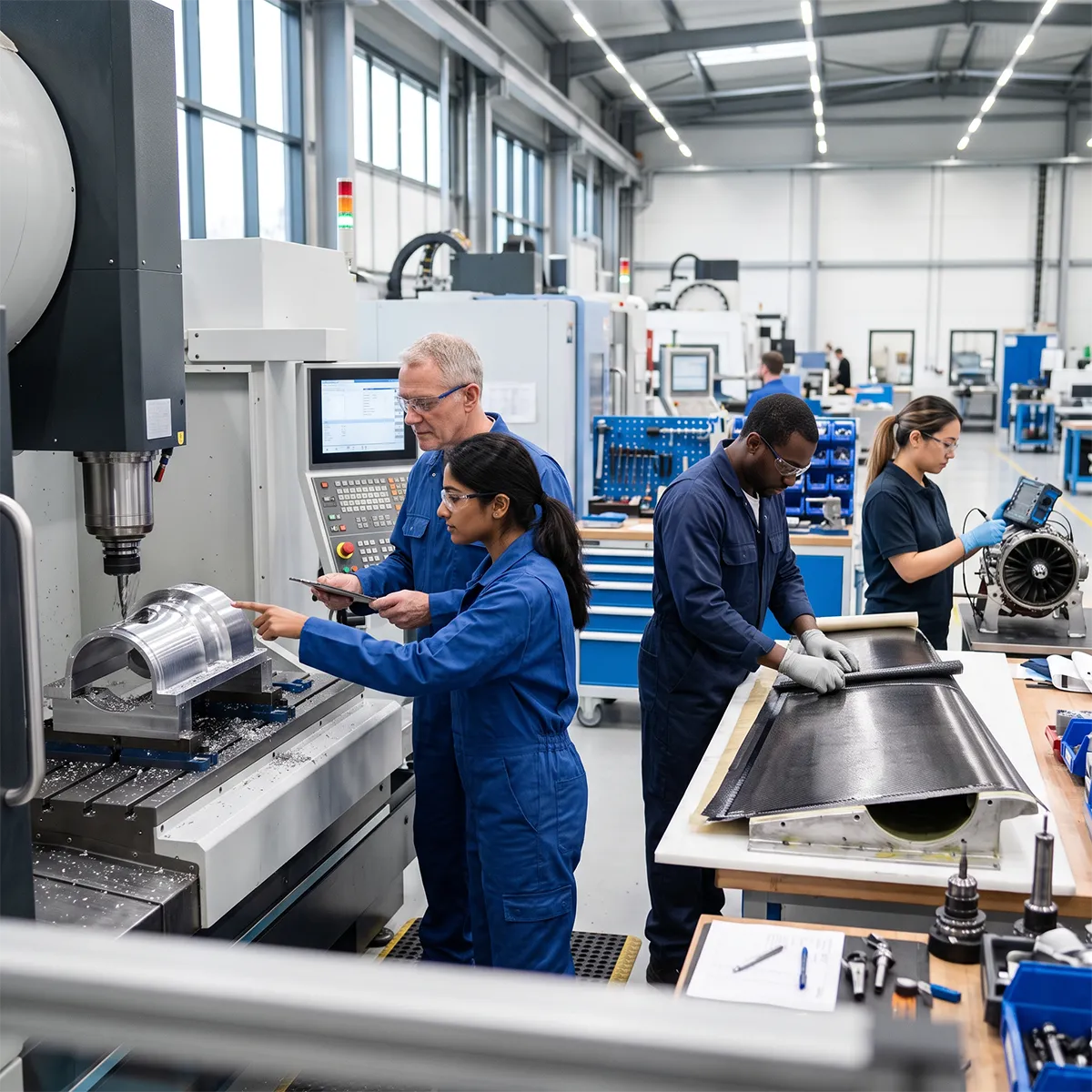
The aerospace supply chain depends on skilled manufacturing personnel, CNC machinists, composite fabricators, electromechanical assemblers, NDT inspectors, precision welders, whose skills require years of development through trade training and hands-on program experience. The vocational training pipeline for these roles has weakened significantly over two decades of underinvestment, and programs are feeling the consequence in production capacity and quality assurance.

How Programs Respond Effectively
The programs that navigate these challenges best share several practices:
- Proactive workforce planning integrated into program scheduling, not a trailing HR function
- Long-term staffing partnerships that maintain cleared and specialized pipelines rather than sourcing on demand
- Deliberate knowledge transfer structures that don’t let critical institutional knowledge remain in individual heads
- Realistic hiring timelines that account for clearance, ramp-up, and specialization depth rather than assuming a 30-day fill for any role
Build a Proactive Aerospace Workforce Strategy with PDS
PDS has operated in aerospace recruiting since 1987 — part of a legacy of excellence and innovation across the industries we serve. We maintain relationships across major program hubs and build pipelines in the specialized disciplines that programs consistently struggle to fill, backed by the full range of our IT, engineering, and aerospace staffing services.
Connect with our aerospace recruiting team to discuss your workforce planning needs.
