

Machine learning engineers are among the most sought-after technical professionals in the market, and among the most difficult to hire correctly. The combination of high demand, strong compensation leverage among top candidates, severe title inflation in the candidate pool, and the difficulty of evaluating actual production ML capability means that most organizations approach ML hiring with less rigor than the role requires.
This guide covers what genuinely distinguishes a strong production ML engineer from the crowd, how to evaluate them, and where to find them.

What a Production ML Engineer Actually Does
The job title “machine learning engineer” covers an enormous range of actual responsibilities and capabilities. Clarifying what your organization actually needs before beginning the search saves significant wasted effort.
Research-adjacent ML engineers are most comfortable in the experimentation phase: they train models, run evaluations, iterate on architectures, and produce insights about model behavior. Their outputs are typically analysis, trained model weights, and research documentation. They’re valuable in organizations with mature ML platforms that handle the production deployment concerns.
Production ML engineers are focused on the full lifecycle: not just training models but deploying them at scale, monitoring their behavior in production, managing the data pipelines that feed them, maintaining the infrastructure that serves them, and ensuring that model quality metrics are tracked and addressed over time. Their outputs are systems, not just models.
MLOps engineers specialize in the platform layer: the tooling, infrastructure, and developer experience that enables ML teams to train, evaluate, deploy, and monitor models efficiently. They’re closer to platform engineers than to data scientists, but with specific ML workload expertise.
Most organizations that say they need “ML engineers” actually need production ML engineers or MLOps engineers, but they interview for all three and often make wrong-fit hires as a result of the ambiguity.


What Separates Strong Production ML Engineers from the Crowd
Production system experience, not just model training experience
The most important signal: has this person actually run ML systems in production, serving real traffic, with real SLA requirements? Model training in notebooks and Colab is common. Production inference infrastructure with monitoring, alerting, model versioning, and rollback procedures is much less common and much more valuable.
Understanding of the full data pipeline
Production ML quality is a data quality problem as much as a model quality problem. Strong ML engineers understand feature engineering, data validation, training data versioning, and the impact of data quality issues on model behavior. Engineers who see ML as purely a modeling problem typically struggle when they encounter the data quality issues that dominate real production ML.
Framework fluency at the infrastructure level
Not just “I’ve used PyTorch” but “I understand how PyTorch works under the hood well enough to optimize inference, manage memory efficiently, and debug non-obvious performance issues.” Deep framework fluency is a strong signal of genuine production experience.
Architectural judgment
Can they make good decisions about when to use a large pre-trained model vs. a smaller fine-tuned model vs. a classical ML approach vs. a rules-based system? Good ML engineers have opinions about these trade-offs that are grounded in production experience, not just theoretical preference.
Communication about uncertainty
ML systems are probabilistic. Strong ML engineers can communicate clearly about model uncertainty, evaluation limitations, and the cases where their system will likely fail. Engineers who oversell model capabilities create downstream product problems.


How to Evaluate ML Engineering Candidates
Technical assessment around production scenarios
A take-home or live exercise that involves diagnosing a production ML problem, an evaluation report showing suspicious performance patterns, a latency issue in a serving system, a data quality problem in training data, evaluates production thinking better than any coding test.
Architecture discussion
Ask the candidate to walk you through a production ML system they’ve built or meaningfully contributed to. What were the design decisions? What were the trade-offs? What would they do differently? Strong candidates discuss trade-offs intelligently. Candidates who can only describe what they did, not why or what the alternatives were, typically lack the engineering depth that production work requires.
Reference conversations with specific questions
General reference conversations produce general answers. Ask specifically: What’s the most complex ML system this person has designed or built? What production incidents did they handle, and how? What were their documentation and handoff practices? These questions produce differentiated responses.
Where to Find ML Engineers Who Aren’t Applying to Job Postings
The best ML engineers are almost universally either currently employed or in highly competitive active search processes. Finding them requires:
Open source contribution networks: ML engineers who contribute meaningfully to open source ML frameworks, tools, or model evaluations are identifiable and their technical work is publicly verifiable. This is one of the highest-signal sourcing channels for genuine technical depth.
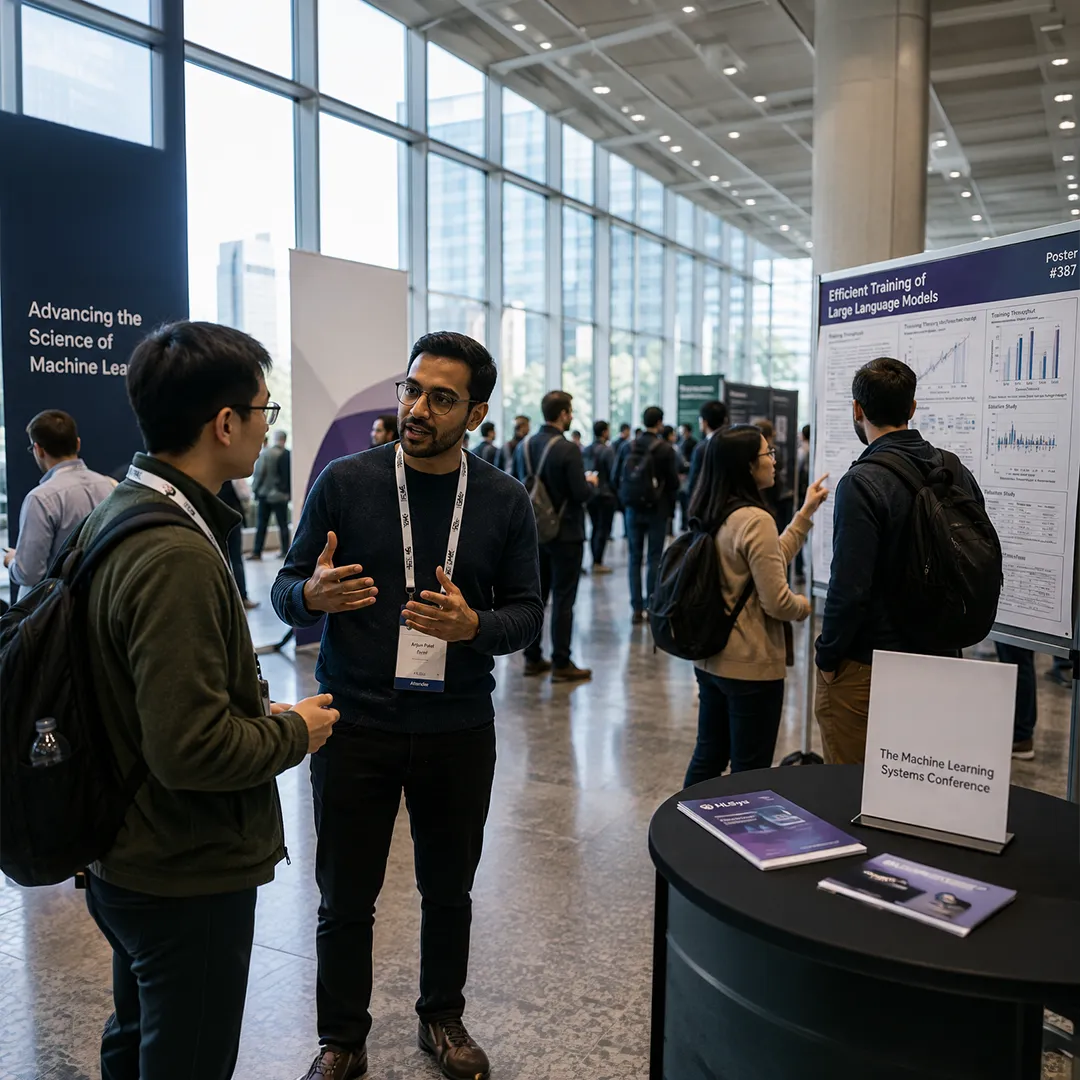
ML conference and workshop communities: NeurIPS, ICML, ICLR, MLSys, and applied ML conferences (MLConf, Apply(ML)) are where practitioners at the frontier are active. Building presence and relationships in these communities is a long-term sourcing investment that pays disproportionate returns.
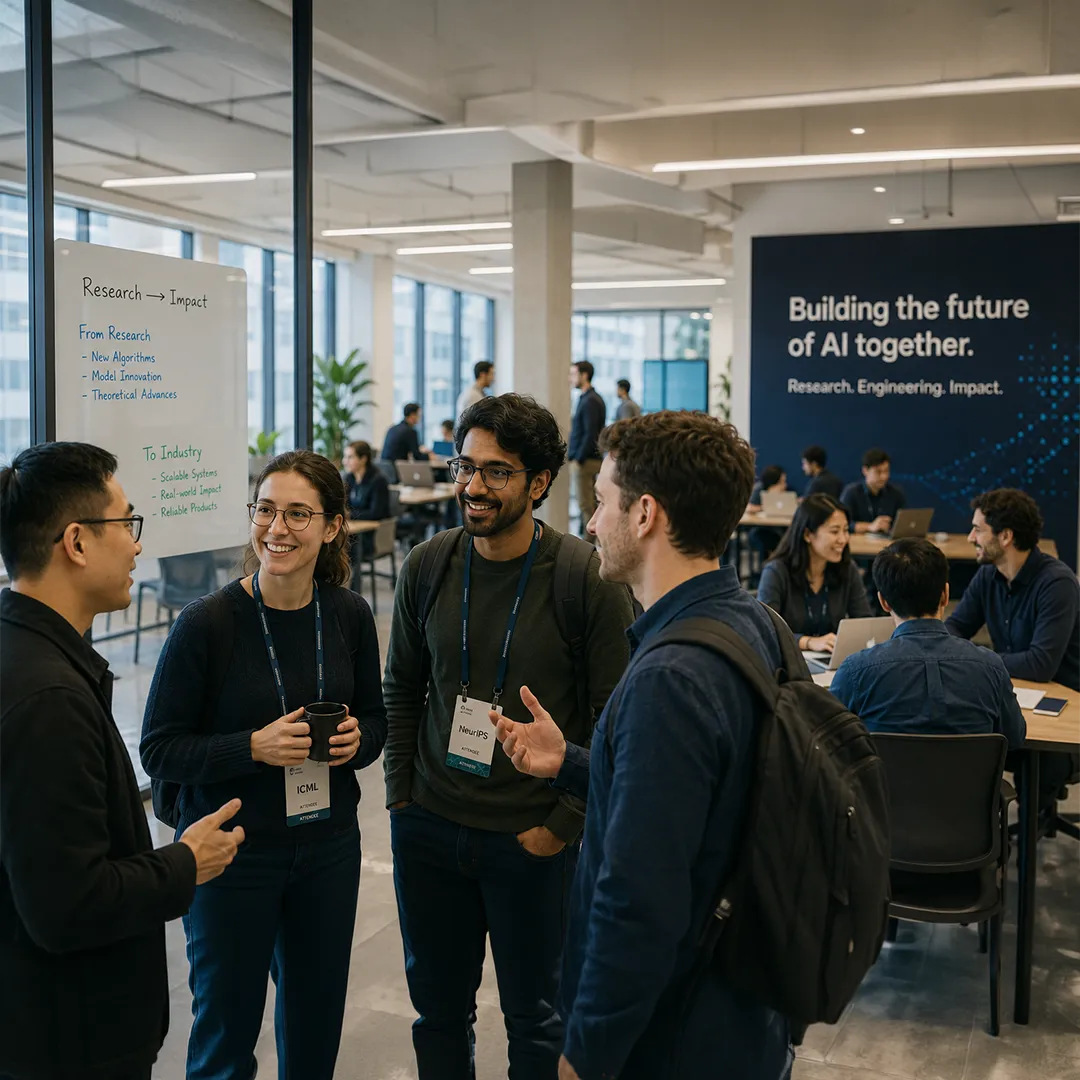
Research to industry transition pipeline: Strong ML researchers from academic programs who are transitioning to industry roles represent a high-quality pipeline, often with very strong theoretical foundations and, increasingly, production experience from research engineering roles.
Referral from strong hires: ML engineering is a small, well-networked community. The best single sourcing lever is your existing strong ML hires asking their networks. A warm introduction from a trusted colleague cuts through the noise that external outreach produces.
PDS maintains active ML engineering pipelines built through these channels, with technical screening designed to evaluate production capability rather than training data familiarity. Talk to our AI and ML staffing team about finding the ML engineers your program needs.
